
Hacker’s View
 [Leader] Forrester Wave™Bot And Agent Trust Management Software, Q2 2026
Kasada shows you who and what to trust across every interaction, so real customers move freely and unwanted behavior stays out.
Book a demo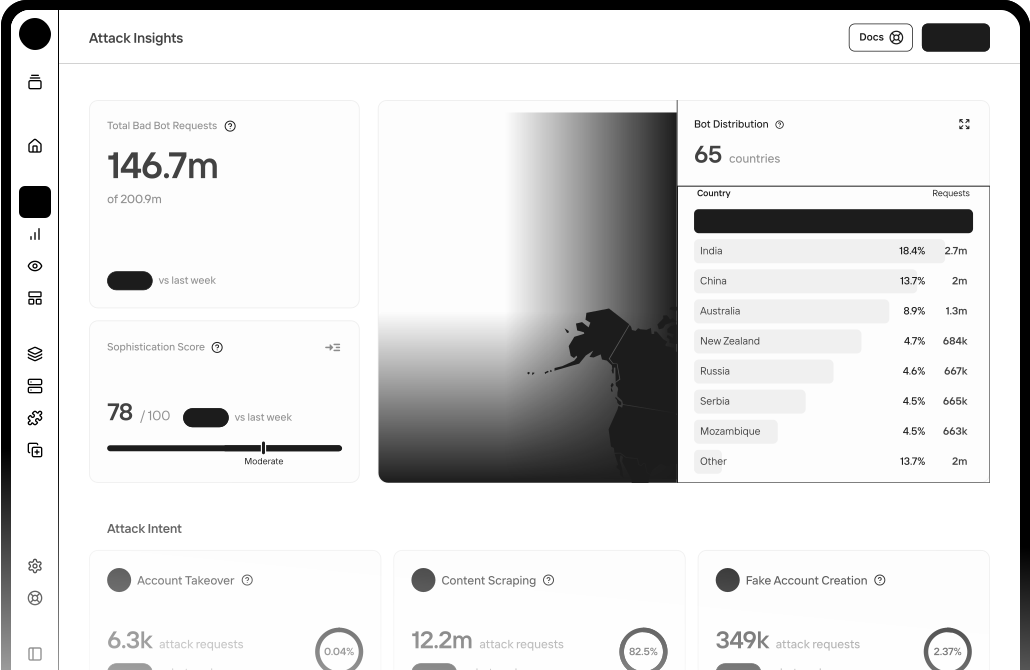
Protecting the worlds most coveted brands, $150 billion of eCommerce and 250 million people daily.















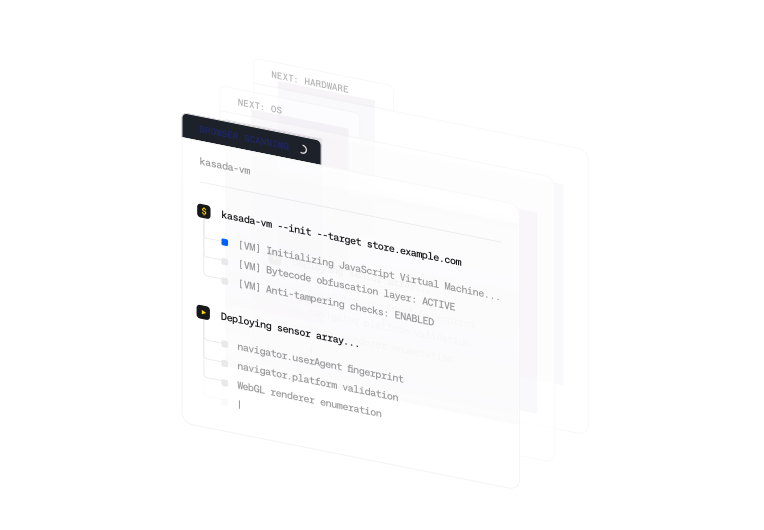
Bot mitigation that actually works. We stop the most sophisticated bot attacks without CAPTCHAs.

Human fraud detection at the edge. Detect fraud and abuse from organized fraud rings to an individual operation.
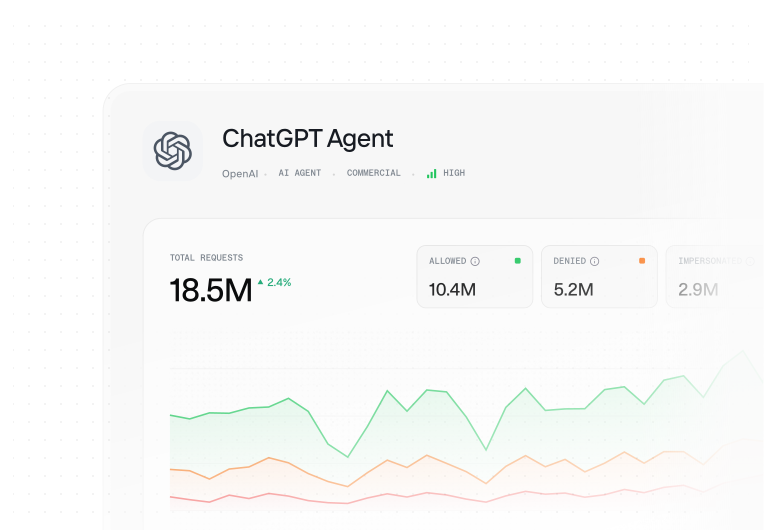
Gain visibility and control over what Al agents can access, down to the HTTP request.
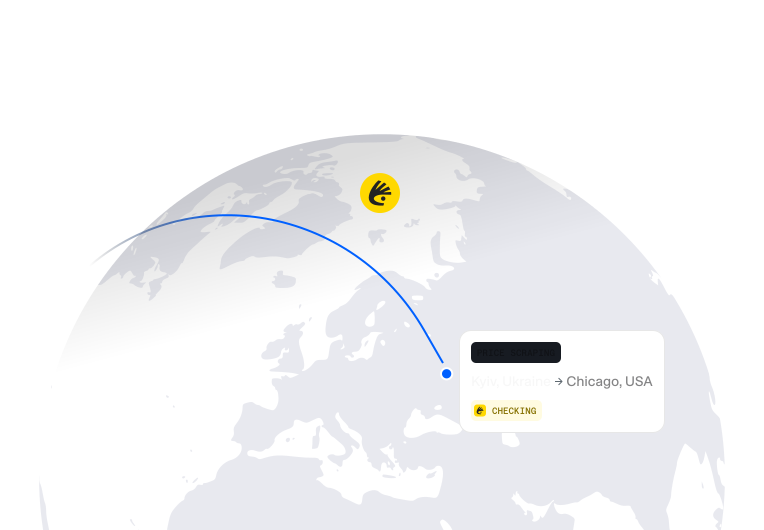
See warning signs before fraud occurs. Prevent bot attacks on your business logic and customer data.
Use cases
Kasada brings Bot Defense, Account Intelligence, and AI Agent Trust together on one intelligence layer. The same high-integrity signal stops automated attacks, exposes fraud networks that look human, and governs the AI agents you choose to let in.
Stop credential stuffing at login and identify compromised accounts when attacker behavior changes. Kasada connects bot, device, and account signals to block the takeover before stolen access turns into fraud, support costs, and customer churn.
Keep pricing, product, and proprietary content out of the hands of scrapers without blocking the AI services you want. Kasada stops automated extraction, verifies legitimate agents, and gives each one access only to the endpoints you approve.
Assess risk before payment, even when there is no account history to rely on. Kasada connects device, identity, and interaction signals to surface stolen cards, disposable identities, and repeat offenders hiding behind guest checkout.
Stop bots from triggering verification messages at scale. Kasada detects credential testing and one-time-code abuse before it inflates telecom bills, overwhelms authentication systems, or gives attackers a path into customer accounts.
See when one operator is hiding behind dozens or hundreds of accounts. Kasada links devices to identities to expose bonus farming, reseller rings, referral abuse, and repeated use of first-time customer offers.
Know which AI agents are real, who sent them, and what they should be allowed to do. Kasada verifies agent identity, detects impersonators, and applies endpoint-level access policies without reducing every decision to allow or block.
Hacker’s View
Hacker's view
Hacker’s View
Hacker’s View
Hacker’s View
A better signal
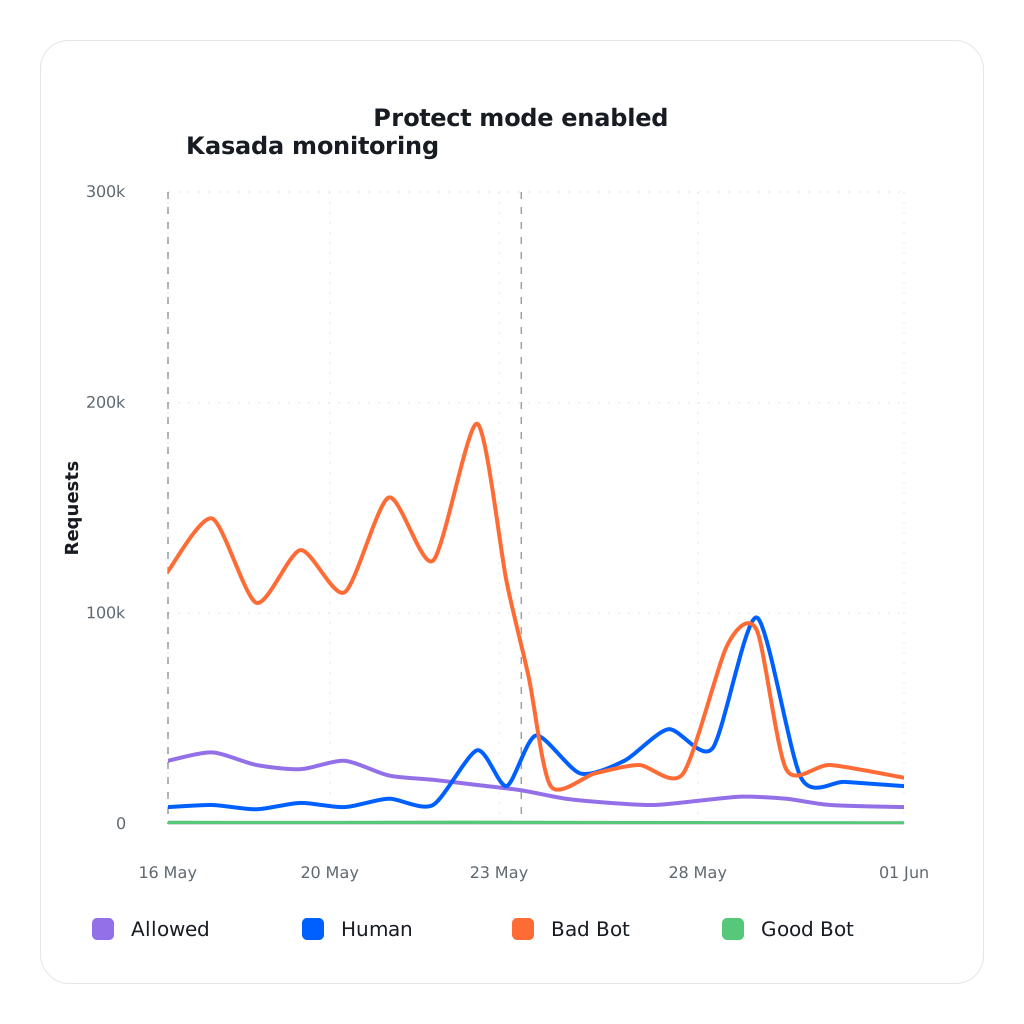
Deployed behind the incumbent bot-management provider, Kasada identified 90% of all requests as bad bots — 98% of them low-sophistication traffic that never executed Kasada’s JavaScript.¹

200% ROI in under 6 months
For every dollar we spend on Kasada, we're preventing $15 to $30 in loss.
$6.8M
In cost savings and business benefits over three years
Fraud avoided, infrastructure saved, and legacy tools retired, quantified across a composite $10B enterprise.
40%
Less time spent fighting bots
Security teams spend less time on manual tuning and incident response, freeing them for higher-value work.
$1M+
Saved annually on infrastructure alone
Blocking bad bot traffic at the edge cuts unnecessary compute and bandwidth costs before it reaches your servers.
Customer stories
Kasada found out 90% of traffic was bots, which our previous provider didn’t tell us about. That is how good Kasada is.
For one of our critical endpoints, bot traffic has dropped by over 90%. Overall, bad bot traffic has declined by around 50% on applications protected by Kasada.
Kasada found out 90% of traffic was bots, which our previous provider didn’t tell us about. That is how good Kasada is.
We have seen a 20% reduction in credential stuffing compared to the previous provider
